Sleep, menopause and you
and all the things I’ve tried while lying awake at 3am
Excerpt from The Hormone Heist:
“There was a time I could fall asleep on a sofa, in a car, or mid-conversation like a cat in a patch of sun. Now, I lie in bed wide awake like I’ve had three espressos and a ghost has just whispered, ‘Remember that embarrassing thing you did in Year 9?’”
That line still feels annoyingly accurate.
Sleep used to just happen. Now it’s something I think about far too much, plan for, and occasionally give up on entirely. And because people keep asking me what actually helps, I thought I’d sit here with a cup of tea and tell you honestly what I’ve tried, what I think works and what might be worth a look if your nights have gone completely off piste.
I’m not a menopause expert. I’m just tired, curious, and very observant.
Let’s start with the thing that keeps coming up: magnesium
Magnesium appears in almost every menopause sleep conversation, and for good reason. It plays a role in muscle relaxation and calming the nervous system, which is why it’s often used for leg cramps, tension, headaches and sleep.
Low effort, low-cost option:
Magnesium spray (feet before bed)
At the affordable end, BetterYou do a magnesium spray that you apply to your feet before bed. They also do a children’s version. I used this years ago when my kids didn’t sleep and it genuinely helped, which is why I still trust it now.
It’s easy, you don’t have to swallow anything, and it feels like a small caring habit rather than another task.
Higher-end, more ritual-based:
Magnesium creams and butters
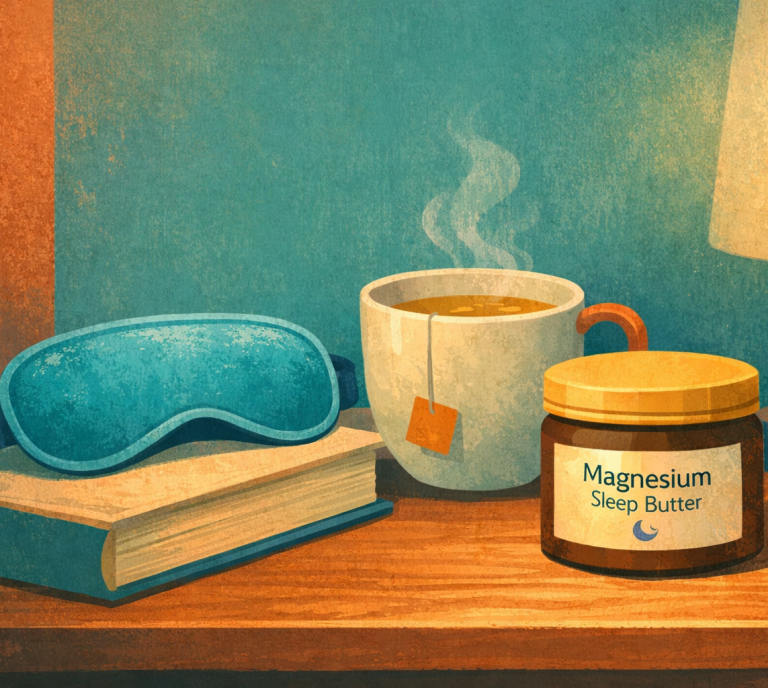
If you like something that feels a bit more indulgent, magnesium creams are lovely. Sweet Bee Organics make a magnesium butter specifically aimed at sleep, which you rub into your feet before bed. It costs more, but if you like a ritual, this one feels comforting rather than medicinal.
Capsules (with caution):
Magnesium supplements
Capsules work really well for some people, but this is where I’m careful. There are different types of magnesium, and they do different things. I personally use clean brands like Cytoplan and Advanced Nutrition Programme, mainly because they avoid unnecessary fillers.
That said, if you’re going down the capsule route long-term, this is where a nutritionist can really help. It’s not one-size-fits-all, and it’s not something to guess your way through.
Teas, blends and the art of winding down:
I’ll be honest. Herbal sleep teas don’t knock me out. But they do help my brain get the message that the day is over.
Brands that come up again and again include:
- Pukka (Womankind, Night Time)
- HotTea Mama (menopause blends)
- Sleep Calm / Night Calm style blends you’ll see in health shops
I don’t treat tea as a sleep cure. I treat it as a signal. Something warm, repetitive and gentle that says, “We’re done for today.”
Night sweats, overheating, and the duvet nightmare:
If your main issue is waking up boiling, temperature control matters more than willpower.
Low-effort changes:
- Fans and airflow
- Keeping the bedroom cooler than the rest of the house
- Lightweight layers rather than one heavy duvet
Mid-range upgrades:
- Cooling pillows (mine came from Amazon, nothing fancy)
- Cooling mattress toppers, which make a noticeable difference
Higher-end options:
- Temperature-controlled mattress pads that heat or cool each side of the bed independently
These don’t fix hormones, but they can reduce how often you wake up furious and sweaty.
Eye masks: quietly brilliant
Cooling eye masks are one of those things that don’t get talked about enough. The ones you keep in the fridge or freezer can really help if you wake with a headache, feel overheated, or just need your nervous system to calm down.
They’re inexpensive, low-commitment, and genuinely soothing even if they don’t magically send you back to sleep.
What you wear to bed matters more than you think
Breathable sleepwear makes a real difference. Cotton and moisture-wicking fabrics are far kinder when your body can’t decide what temperature it wants to be.
There are now brands marketing specifically to menopause, including nightwear designed for overheating. I’m still exploring this space, but it’s definitely one to watch and one I’ll come back to properly.
Sound, light, and distracting your brain
- Fans double as cooling and white noise
- White noise or ambient sound works perfectly well from YouTube
- Sleep podcasts are brilliant for stopping your brain spiralling, I like Insight Timer
- Blackout curtains are genuinely helpful, especially in summer
The aim here isn’t perfect sleep. It’s stopping your brain from running your entire life history during the night.
The boring but helpful stuff (sorry)
- Getting up at the same time every day really does help, over time
- Lower lights and fewer screens in the evening help more than we want them to
- Going for a walk when you’re overwhelmed is not failure, it’s regulation
- Gentle breathing or grounding exercises can calm a jumpy nervous system
Nothing extreme. Nothing preachy.
A quick word on trackers
Rings and watches can be useful for spotting patterns, but they can also make you feel worse. I dip in and out. If I start feeling judged by my wrist, it comes off.
Your body knows things data doesn’t.
And finally
Nothing works every night.
Nothing works for everyone.
And being exhausted doesn’t mean you’re doing menopause wrong.
This page is here to share what women commonly try, not to promise fixes. The full emotional reality, the humour, the frustration and the honesty live in the sleep chapter of The Hormone Heist. This is just the practical companion.
And if you’ve found something that genuinely helps you sleep, tell me. Not a miracle cure, just a small thing that makes nights easier. I’ll add it here, because this works best when we help each other.
Now, finish your tea. That’s enough for today.